


/ Whole blood inline leukoreduction filter
CellNet™ PR
A leukocyte and platelet removal filter for whole blood.
Built for red cell and plasma production. One inline pass takes out the leukocytes and platelets, so every unit starts cleaner, with no extra step in the blood center.
/ Recognized in 2026
-
 Edison Awards Silver winnerEnergy & Climate Resiliency
-
 R&D 100 Award WinnerProcess / Prototyping
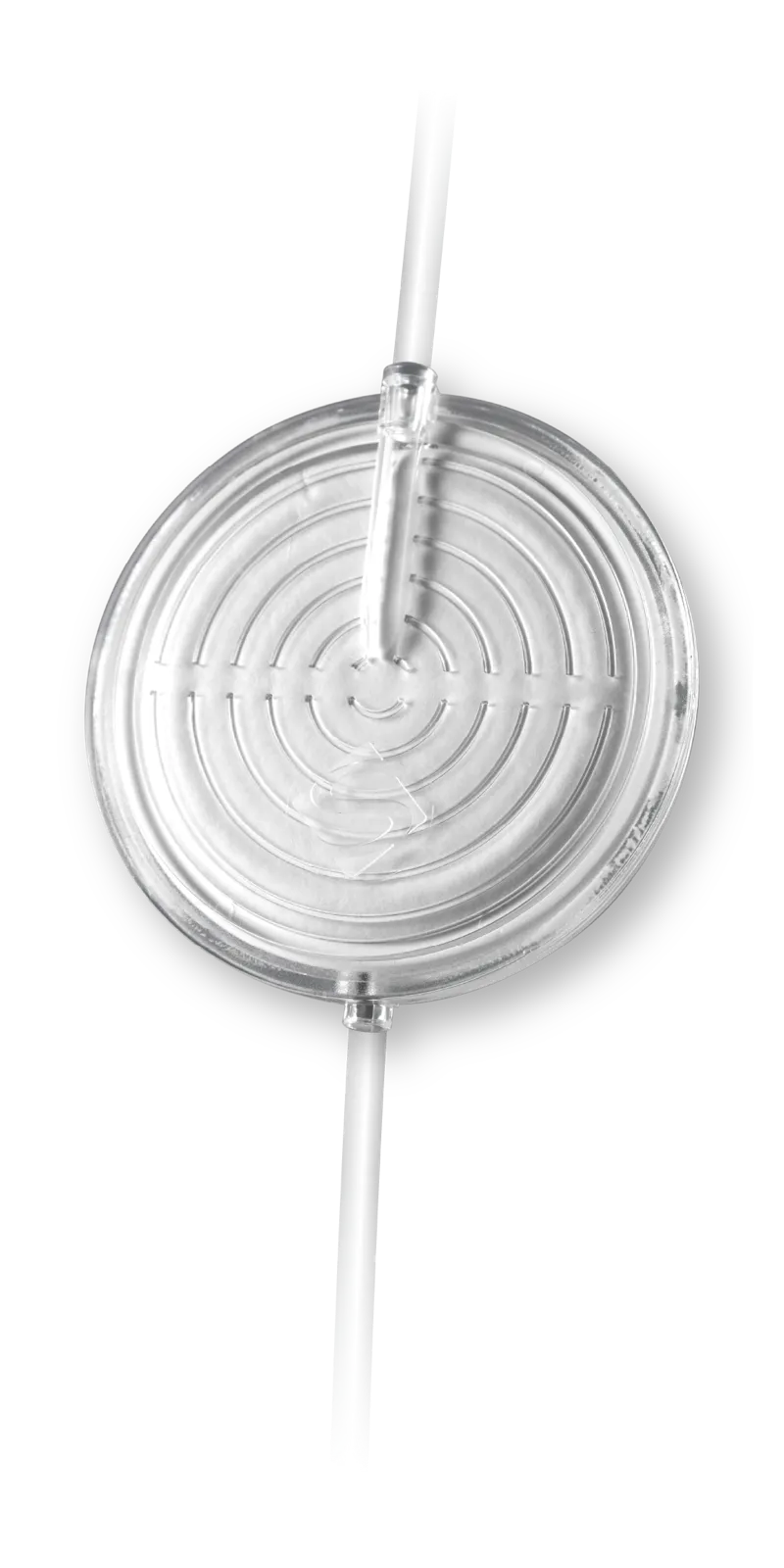
- Non-DEHPPolycarbonate housing, no PVC, no plasticizer
- No primingSupplied dry; the medium wets out with the first blood through it
- 200–500 mL unitsSupports national collection volumes, with the same standard
- Any sterilizationSteam, gamma or EtO, through your set’s own cycle
- 100% made in TaiwanMedia, filter and assembly at our ISO 13485 plant in Yilan
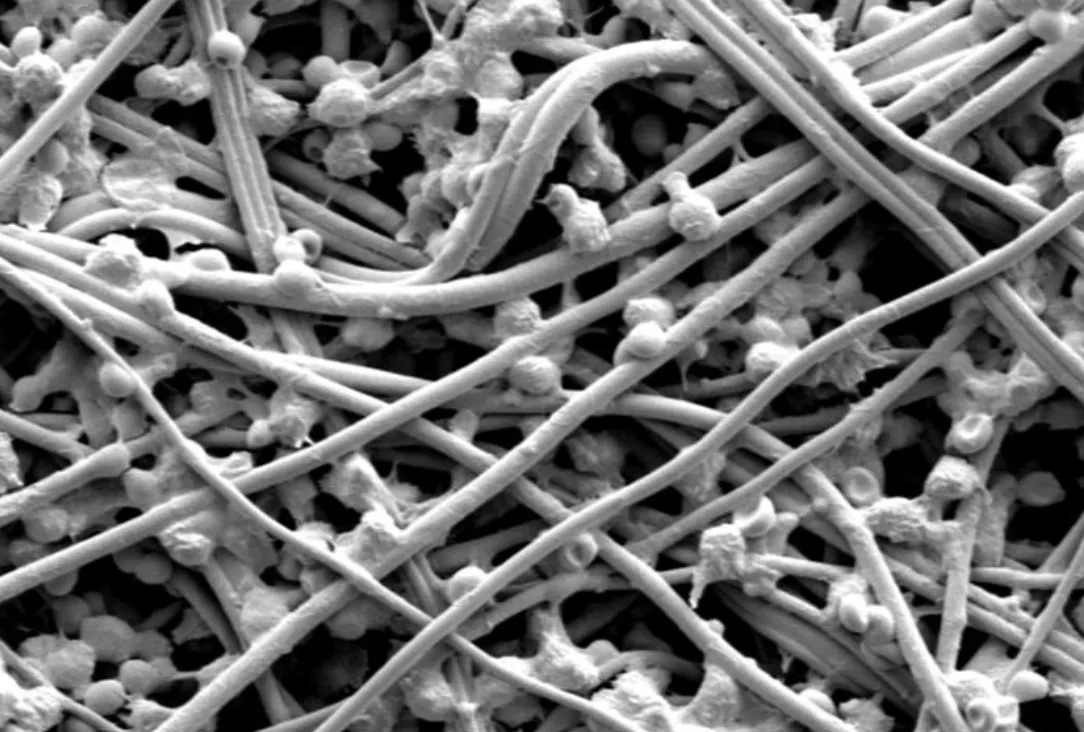
Performance
What it takes out. What it keeps.
- Taken out
Leukocytes
<0.3 × 10⁶ residual per unitThe cells behind febrile reactions, HLA alloimmunization and CMV transmission.
- Taken out
Platelets
>98% removed at filtrationSelectively captured by the media and removed at filtration, before the unit goes into storage.
- Kept
Red cells
91–95% recoveryMore of every donation becomes a usable unit, with less left behind in the filter.
- Kept
Plasma
Platelet-poor from the setBefore centrifugation, with no extra step in the blood center.
CellNet™ PR on fresh human whole blood. Presented at the 39th ISBT International Congress, 2026. Full methods and results are in the technical brochure.
In your set
One filter, inline, between the primary bag and the satellite bags.
The unit is filtered once by gravity, then separated into leukoreduced, platelet-reduced red cells and plasma, or used as whole blood. No change to the components you already make.
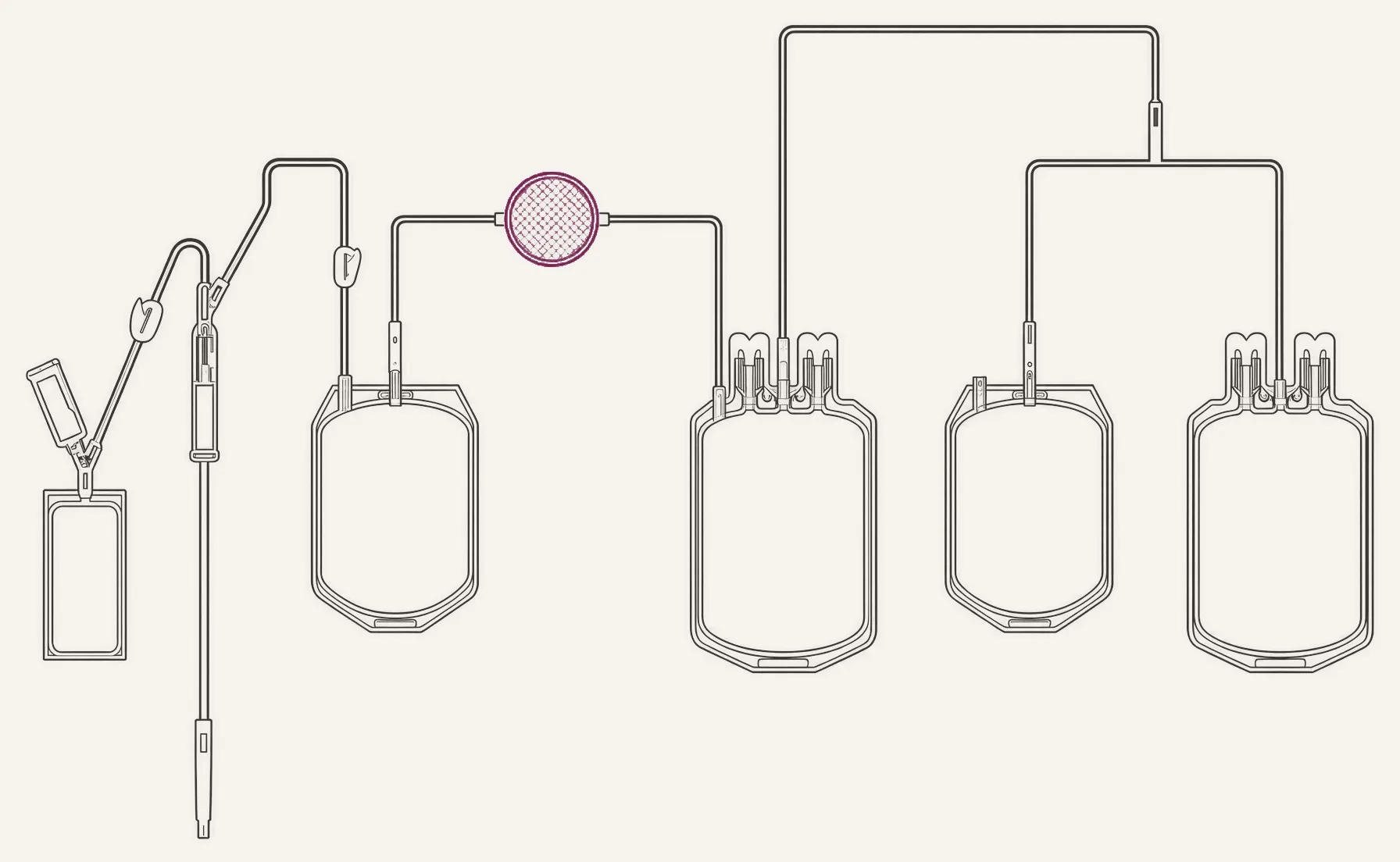
- 1CollectWhole blood into the primary bag.
- 2FilterOnce, by gravity, through CellNet™ PR.
- 3ProcessFor separation into red cells and plasma, or as whole blood.
Example set configuration, for illustration. CellNet™ PR can be built into any inline whole blood collection system. Ask about your set
Applications
One filtration step at the whole blood stage, carried from separation through storage to emergency care.
01Cell separation
In the blood center, when whole blood becomes components.
- Red cells · Plasma
Component production
Whole blood is filtered once, inline, before centrifugation. Red cells and plasma separate already leukoreduced and platelet-poor, with no extra step.
How it sits in the set
02Storage and products
What the components are like over their shelf life.
- Red cells
Red cell concentrates
Stored for up to 42 days without the platelets that would otherwise activate and shed microparticles and cytokines over the shelf life.
In the research - Plasma
Frozen plasma
Platelet-poor before it is frozen, with fewer platelets carried into the freezer, where they fragment.
In the research - Plasma
Cryoprecipitate
Made from platelet-depleted plasma, so its content is defined by the plasma proteins rather than by variable platelet debris.
In the research
03Prehospital and emergency care
Red cells and plasma, ready where they’re needed.
Red cells and plasma in one unit, for prehospital and emergency care
Red cells and plasma, the combination UK prehospital teams rely on for major hemorrhage, in one leukocyte- and platelet-depleted unit: Red Cells and Plasma, Leucocyte Depleted (RCP).* Not platelet-sparing whole blood. Platelets can follow in hospital, when they’re needed.
Ask about red cells and plasmaWhy it’s made this way
- Red cells and plasma firstOxygen delivery and clotting factors first. In the SWiFT trial, adding platelets via whole blood before hospital showed no benefit.†
- One bagOne unit to carry, check and transfuse instead of two.
- Platelets out>98% removed. Platelet sCD40L and lysophospholipids are reported second hits for TRALI in patients already primed by trauma, infection or surgery.‡
- Leukocytes outThe cells behind febrile reactions, HLA alloimmunization and CMV transmission,§ and a proposed driver of immunomodulation.‖
Sources +
- * McCullagh J, Proudlove N, Tucker H, et al. Making every drop count: reducing wastage of a novel blood component for transfusion of trauma patients. BMJ Open Qual 2021;10(3):e001396. pmc.ncbi.nlm.nih.gov/articles/PMC8268902
- † Smith JE, Cardigan R, Sanderson E, et al. (SWiFT Trial Group). Prehospital whole blood in traumatic hemorrhage: a randomized controlled trial. N Engl J Med 2026. doi:10.1056/NEJMoa2516043 pubmed.ncbi.nlm.nih.gov/41841706
- ‡ Khan SY, Kelher MR, Heal JM, et al. Soluble CD40 ligand accumulates in stored blood components, primes neutrophils through CD40, and is a potential cofactor in the development of transfusion-related acute lung injury. Blood 2006;108:2455–62. pmc.ncbi.nlm.nih.gov/articles/PMC1895564
- ‡ Silliman CC, Burke T, Kelher MR. The accumulation of lipids and proteins during red blood cell storage: the roles of leucoreduction and experimental filtration. Blood Transfus 2017;15(2):131–6. doi:10.2450/2017.0314-16 pmc.ncbi.nlm.nih.gov/articles/PMC5336334
- § British Committee for Standards in Haematology, Blood Transfusion Task Force. Guidelines on the clinical use of leucocyte-depleted blood components. Transfus Med 1998;8:59–71. b-s-h.org.uk/media/16279/leucocyte-dpleted-blood-1998.pdf
- ‖ Vamvakas EC, Blajchman MA. Transfusion-related immunomodulation (TRIM): an update. Blood Rev 2007;21(6):327–48. doi:10.1016/j.blre.2007.07.003 read.qxmd.com/doi/10.1016/j.blre.2007.07.003
Beyond whole blood
Have a different separation problem?
We develop the media for it and prove it on our pilot line.
Global collection standards
Engineered to perform for every collection standard, globally.
Collection standards vary by market. Your filter shouldn’t. Two product lines, PR 250 and PR 500, share one media and deliver the same leukoreduction below the European limit at every volume from 200 to 500 mL. One platform for every set you build and every market you supply, so blood reaches the patients who need it, wherever it’s collected.
Engineered at the fiber
Supercritical CO₂ builds the media’s affinity through the depth of every fiber, so each unit meets the same material.
Sized to the unit
Two housings, each matched to its volume range, so the media works within its design window at every unit size.
Below the EDQM limit, worldwide
Residual leukocytes under 1 × 10⁶ per unit at every volume tested, on both sizes.
PR 250
200–250 mL
- 200 mLJapan · China
- 250 mLTaiwan · Vietnam
PR 500
300–500 mL
- 300 mLSouth Korea
- 350 mLMalaysia
- 400 mLChina · Japan · South Korea
- 450 mLEurope · Turkey · Malaysia
- 500 mLTaiwan · United States
Unit volumes ±10%.
| Standard | Residual leukocytes, required | CellNet™ PR |
|---|---|---|
| Council of Europe · EDQM Guide | <1 × 10⁶ per unit | Met |
| AABB · US FDA | <5 × 10⁶ per unit | Met |
| Japan · Japanese Red Cross | <1 × 10⁶ per bag | Met |
| China · GB 18469-2012 | ≤2.5 / 3.8 / 5.0 × 10⁶ (200 / 300 / 400 mL units) | Met |
| Taiwan · Taiwan Blood Services Foundation | <5 × 10⁶ per unit | Met |
Why platelets
After leukoreduction, platelets are the main cells left in a red cell unit.
In storage they activate and shed microparticles and cytokines that no later step can remove.1,2,3 Taking them out at filtration, before storage, prevents it at the source.4 The plasma starts platelet-poor as well.
Sources +
- Glenister KM et al. Level of platelet-derived cytokines in leukoreduced red blood cells is influenced by the processing method and type of leukoreduction filter. Transfusion 2010;50:185–9.
- Khan SY et al. Soluble CD40 ligand accumulates in stored blood components, primes neutrophils through CD40, and is a potential cofactor in TRALI. Blood 2006;108:2455–62.
- Rubin O et al. Microparticles in stored red blood cells: submicron clotting bombs? Blood Transfus 2010;8 Suppl 3:s31–8.
- Sugawara A, Nollet KE, Yajima K, Saito S, Ohto H. Preventing platelet-derived microparticle formation, and possible side effects, with prestorage leukofiltration of whole blood. Arch Pathol Lab Med 2010;134:771–5.
Specifications
Full specifications
Performance, use, materials and manufacturing data for PR 250 and PR 500, with drawings, biocompatibility and the ISBT 2026 results. Sent by our team on request.
- Performance
- Use
- Materials
- Manufacturing
The media inside
Media engineered with purpose, pushing the limits of traditional methods.

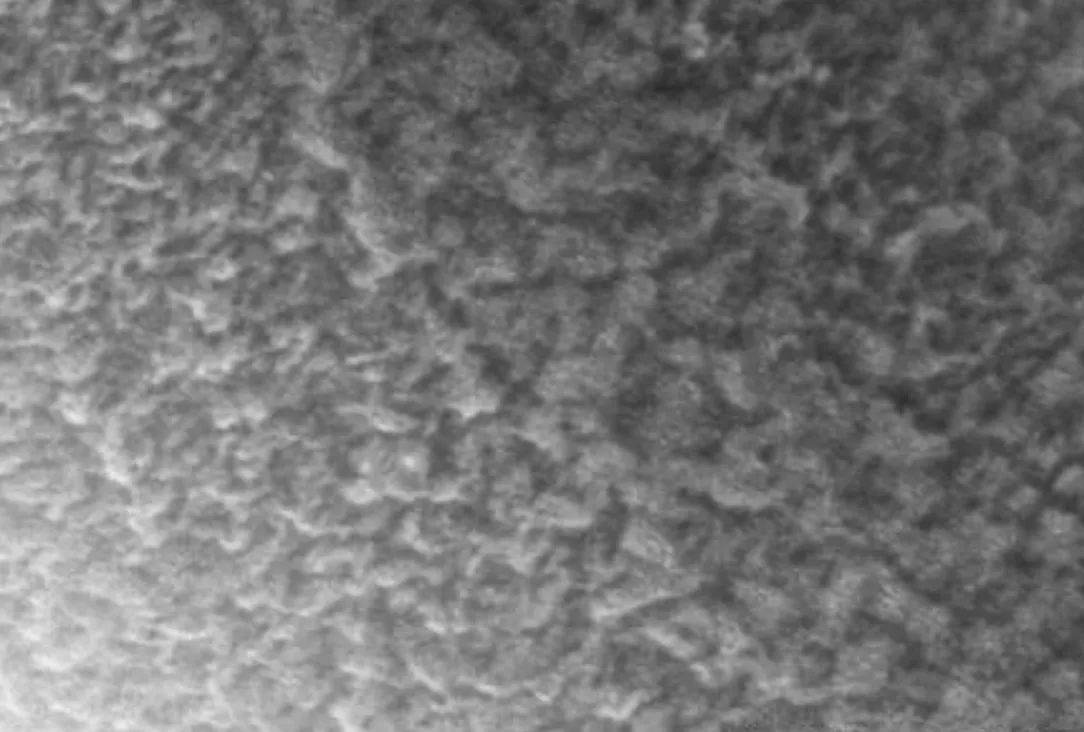
We modify the fiber with supercritical CO₂, which carries the chemistry through its full depth. No solvent baths, no rinsing, no process wastewater, and the CO₂ is recycled.
- 0 L
- process water
- 0
- organic solvents
- CO2
- recycled in the process
For set makers
Your blood bag system, equipped with CellNet™ technology.
- 01Evaluate
Evaluation units
Units under NDA, with the technical brochure, so your engineers can test CellNet™ PR in your own set before any commitment.
Request evaluation units - 02Qualify
A technical file, ready to use
Biocompatibility, extractables, lot records and change control for your submission, plus engineering time for your validation.
Ask for the file contents - 03Supply
Long-term supply
Agreements with committed capacity, scaled to your forecast, with full lot traceability.
Talk about supply
Resources
- PDFTechnical brochureSpecifications, drawings, materials, biocompatibility and the ISBT 2026 results.
- ArticleWhy remove platelets?What platelets do in a stored red cell unit, and the research behind it. Read : Why remove platelets?
- Data packSustainability dataSupplier carbon, water and materials data for Scope 3 and supplier reviews. Get : Sustainability data
- CertificateISO 13485Quality management system certificate for our Yilan site. Request : ISO 13485
Sangtech develops and manufactures CellNet™ filter media and semi-finished filters for medical device manufacturers and research facilities. CellNet™ PR is not a medical device and cannot perform a medical function on its own. This page provides general product information. Performance figures are from Sangtech internal validation on fresh and overnight-held (OVN) whole blood; full methods, sample sizes and results are in the technical brochure. Availability and configuration vary by market; please contact us.
Evaluate CellNet™ PR in your set.
Tell us about your collection set and volumes. A specialist will be in touch.